

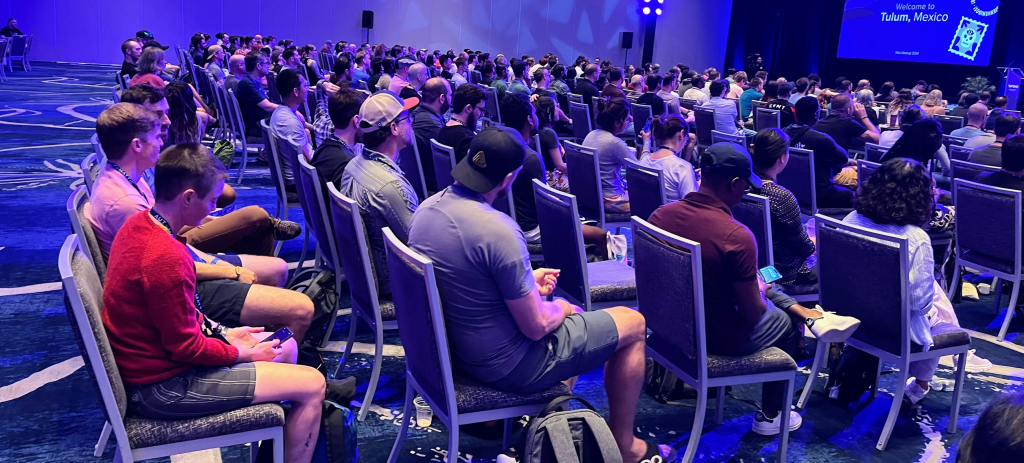
In all my life, I attended exactly one large-scale workshop that felt like a productive use of my time. It was a coding session at WordCamp Europe 2019 in Berlin. When I proposed running a workshop on the future of commerce at our WooCommerce Division Meetup this year, I expected it to be a relaxed, magical, creative discussion with ±10 of my Woomattician friends somewhere close to a pool bar in Mexico.
However, things turned out differently. Nearly half of our team at the Woo Division Meetup signed up for my workshop. When I learned about this four weeks ago, it was quite a shocking moment. Never had I facilitated a workshop of such a scale before. And my personal opinion on large-scale workshops, in particular on business topics, was…. not the best.
Workshops can easily become passive, time-consuming activities that don’t lead to tangible results. When I set out to organize a workshop for 147 people, my primary goal was to avoid this pitfall. Instead, I aimed to design an experience that not only sparked creativity and deep thinking but also delivered valuable, actionable insights for every participant as well as for us as WooCommerce. And all of this had to be achieved within a constrained 90-minute timeframe.
In this post, I’ll walk you through the process I used to design and run this workshop, the challenges we faced, and how I incorporated both interactive tools and scientific insights to ensure the creation of relevant outcomes. By the end, you’ll have a clear understanding of the methodologies and strategies I used to facilitate a large-scale workshop that did not follow the typical blueprint.
The Challenge of Large Group Facilitation
Organizing a workshop for 147 people in just 90 minutes is no small feat. The sheer size of the group and the limited time meant that we couldn’t rely on traditional group work and lengthy presentations of the results. Instead, I had to find a way to engage everyone simultaneously and extract meaningful contributions from each participant.
The topic of the workshop, “The Future of Commerce,” made the stakes even higher. We wanted to explore complex, evolving trends and map out what the future might hold. The goal was to understand current trends and potential future developments and discuss how we could position WooCommerce in the future. To achieve this, I knew I needed to use the right tools and methodologies to both facilitate discussion and capture insights. All of this with an audience that had no prior training in trend research or other innovation management practices.
Applied Scientific Insight: Effective Group Dynamics
The concept of effective group dynamics was highly beneficial in designing my workshop. Research by Hackman and Morris (1975) shows that teams given clear, structured goals while maintaining room for creativity are more likely to produce meaningful outcomes. They found that group effectiveness is influenced by three key factors:
- The group’s task and goal clarity
- The strategies and processes used by the group
- The interpersonal dynamics and relationships within the group
By focusing on creating tangible and deep insights (clear goal), using structured exercises and tools (effective processes), and mixing up groups (fostering positive dynamics), we applied these research-backed principles to optimize the workshop’s effectiveness.
Defining the Goal: Tangible Outputs, Not Just Talk
The workshop’s goal was clear from the beginning: create tangible value and outputs for everyone involved. Workshops often suffer from being too theoretical, with participants leaving without clear takeaways. Sometimes, they also tend to become like a game that may be fun but doesn’t create a lot of value. I wanted to avoid that by ensuring that every discussion had a practical focus, leading to insights that could be used to drive innovation within our organization.
Having a well-defined, outcome-oriented goal aligns with goal-setting theory (Locke & Latham, 1990), which states that specific, challenging goals lead to higher performance than vague or easy goals. By aiming for relevant outputs and focusing on in-depth research vs. just collecting superficial input, we gave the workshop a clear purpose that motivated participants to engage productively.
Setting the Stage: Introducing Trend Research and Innovation
We began the workshop with an introduction to the concept of trend research. This served as a foundational exercise, ensuring that all participants were aligned on key terms and concepts.
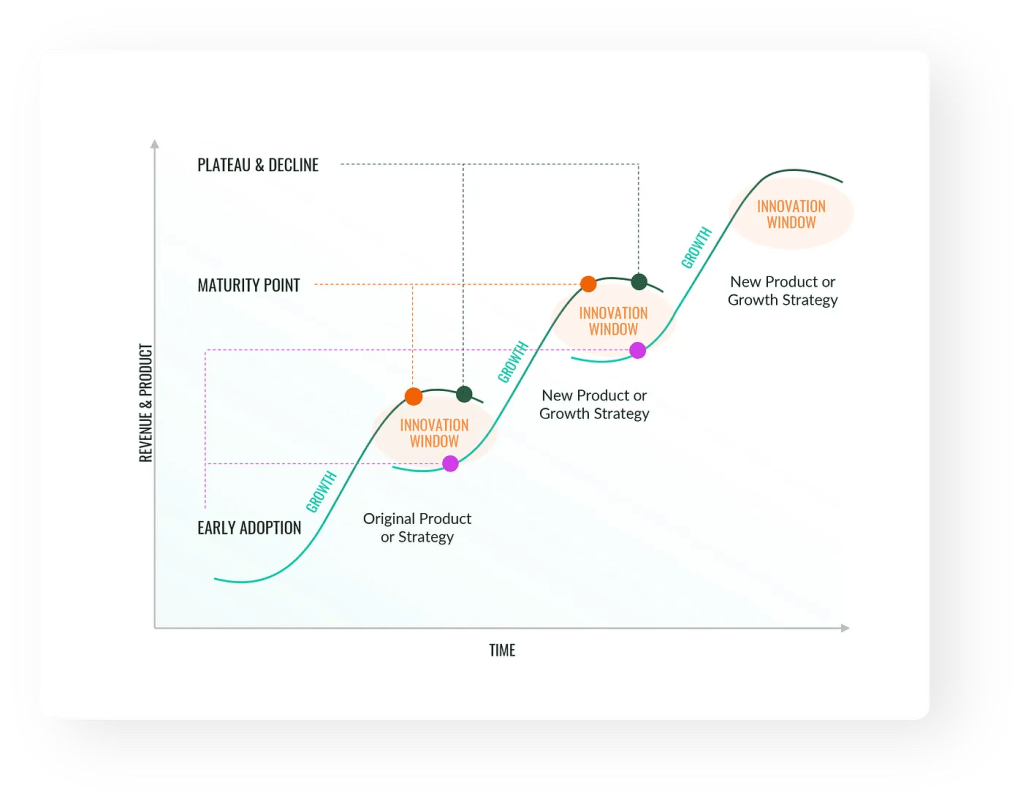
One of the primary frameworks I introduced was the S-curve of innovation. This model, based on the diffusion of innovations theory (DOI) by E.M. Rogers (1962), illustrates how all innovations follow a similar life cycle: they start small, experience rapid growth, reach maturity, and eventually decline.
Understanding this concept and how it translates into business strategy and innovation management was vital for framing our discussions about the future of commerce.
I also made a crucial distinction between an idea and an innovation. Ideas are raw and untested, while innovations have proven their value in real-world applications. Ideas need adoption to become an innovation.

We aimed to go beyond idea generation
and focus on forecasting the next wave of innovations within commerce.
Applied Scientific Insight: Diffusion of Innovations Theory
Rogers’ Diffusion of Innovations Theory (1962) explains how new ideas spread and become adopted within a community. The theory outlines five stages of adoption:
- Innovators (2.5%) – The first to try new ideas, willing to take risks
- Early Adopters (13.5%) – Opinion leaders, embrace change opportunities
- Early Majority (34%) – Adopt new ideas before the average person, rarely leaders
- Late Majority (34%) – Skeptical of change, adopt after the majority
- Laggards (16%) – Conservative, resistant to change, adopt only when necessary
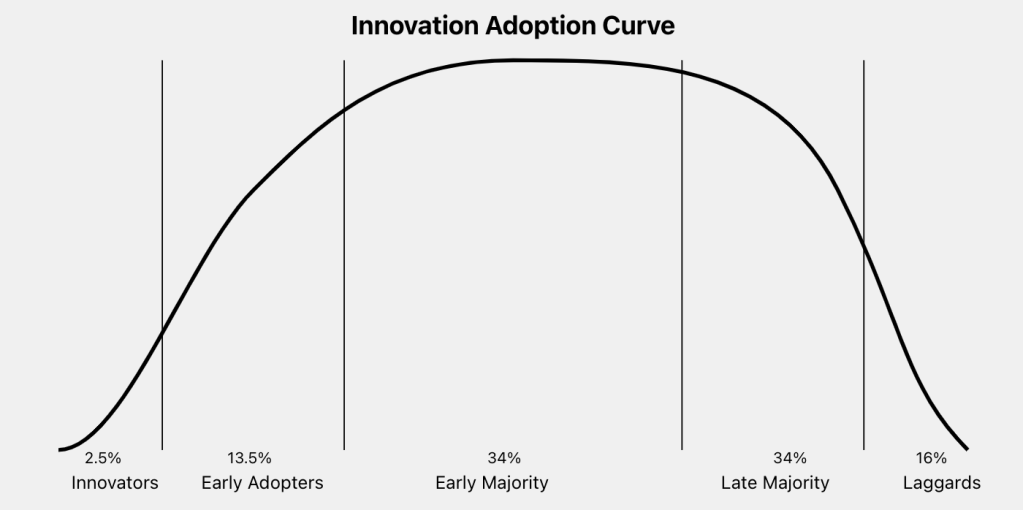
This theory underpinned much of our initial interactions at the workshop as we asked the entire group for their perception of where several trends and topics sit on the adoption curve.
Interactive Tools for Engagement: Slack and Mentimeter
To keep everyone engaged throughout the workshop, we used a combination of interactive tools. Before the workshop, we set up a dedicated Slack channel, which allowed us to share resources and facilitate discussions. At the workshop, it was used to collect and display participants’ inputs in real-time, fostering a sense of collaboration.
In addition, we used Mentimeter, a tool that allows for real-time audience input and feedback in presentations. This was particularly effective in the early stages when we asked participants to share where they saw certain trends on the S-curve. By gathering this data instantly, we were able to create a dynamic, shared understanding of the trends in question.
Applied Scientific Insight: Active Learning
The principle of Active Learning (Bonwell & Eison, 1991) suggests that learners who engage with content in an interactive way retain information more effectively. They define active learning as “instructional activities involving students in doing things and thinking about what they are doing.”
Tools like Mentimeter allowed us to transform passive listening into active participation, ensuring that participants remained engaged throughout. By encouraging participants to think critically about trends and share their perspectives, we facilitated deeper processing and retention of the workshop content.
Simplifying Models With Metaphors: The Tree and the S-Curve
One of the most effective elements of the workshop was using metaphors to make abstract concepts more relatable. We differentiated between micro-, macro-, and megatrends by comparing them to a tree. The seed represents the emergence of a trend, while the tree’s growth and its experience of different seasons symbolize how trends evolve through cycles of adoption, growth, and decline.

Applied Scientific Insight: Metaphors and Cognition
Cognitive science research (e.g., Lakoff & Johnson, 1980) shows that metaphors can enhance comprehension by linking new ideas to familiar concepts. Metaphors allow us to use our existing knowledge of a concrete, well-understood concept (like a tree) to reason about a more abstract or complex concept (like trends).
By comparing trends to the growth of a tree, we made the complexities of trend research more accessible and engaging for participants. This metaphor provided a shared language and mental model that facilitated clearer communication and understanding throughout the workshop.
Fostering Creativity Through Chaos: The Role of Cognitive Distance
Innovation doesn’t thrive in a controlled, predictable environment. It needs creativity and creativity needs chaos and disruption. With this in mind, we introduced a deliberate element of chaos before participants began their exercises. We asked everyone to find a new seat and sit next to someone they hadn’t worked with before. This simple act forced people to interact with different perspectives, shaking up their usual patterns of thinking.
This exercise was inspired by Schumpeter’s (1942) concept of creative destruction, which argues that disruption is necessary for fostering new ideas and innovations. By forcing participants out of their comfort zones, we increased the likelihood of radical, creative insights.
Applied Scientific Insight: Cognitive Distance
Research on cognitive distance (Nooteboom, 2000) shows that individuals exposed to new ideas and unfamiliar perspectives are more likely to develop innovative solutions. Cognitive distance refers to the differences in knowledge, experience, and perspectives between individuals.
While some cognitive distance is necessary for learning and innovation, too much can hinder communication and collaboration. By strategically increasing cognitive distance through our seating exercise, we struck a balance between introducing new perspectives and maintaining a foundation for productive teamwork.
✏️️ Exercise 1: Profiling Trends
For the first exercise, participants formed small squads of 2-4 people and were each asked to profile one specific trend. But instead of looking forward, we asked them to look back and create an encyclopedic entry on the trend’s history, origins, and reasons for its previous adoption.
The purpose of this exercise was to ground participants in a thorough understanding of the trends they were working with. We encouraged them to view the trend through multiple lenses: merchants, shoppers, ecosystem contributors, ecommerce platforms, and service providers. This holistic approach ensured that their trend profiles were detailed and multi-faceted.
We used 20 minutes for this exercise, and each group posted their results to our Slack channel.
Applied Scientific Insight: Collaborative Learning
Collaborative learning theory (Dillenbourg, 1999) emphasizes the importance of social interactions in the learning process. When individuals work together, they can pool their knowledge, skills, and experiences to achieve a shared understanding that exceeds what any one person could develop alone.
By working in small squads, participants were able to explore the trends in depth and bring diverse perspectives to the table. This collaborative approach not only enriched the trend profiles but also laid the foundation for more effective teamwork in the subsequent forecasting exercise.
✏️️ Exercise 2: Forecasting Trend Horizons
Next, we shifted our focus to the future by creating trend outlooks. Participants were asked to forecast and predict the trajectory of their selected trends across four time horizons:
- Current developments: The latest news on the trend.
- 0-3 years: What is already being worked on or announced.
- 4-10 years: Logical predictions with no formal announcements.
- 10+ years: Wild, futuristic ideas.
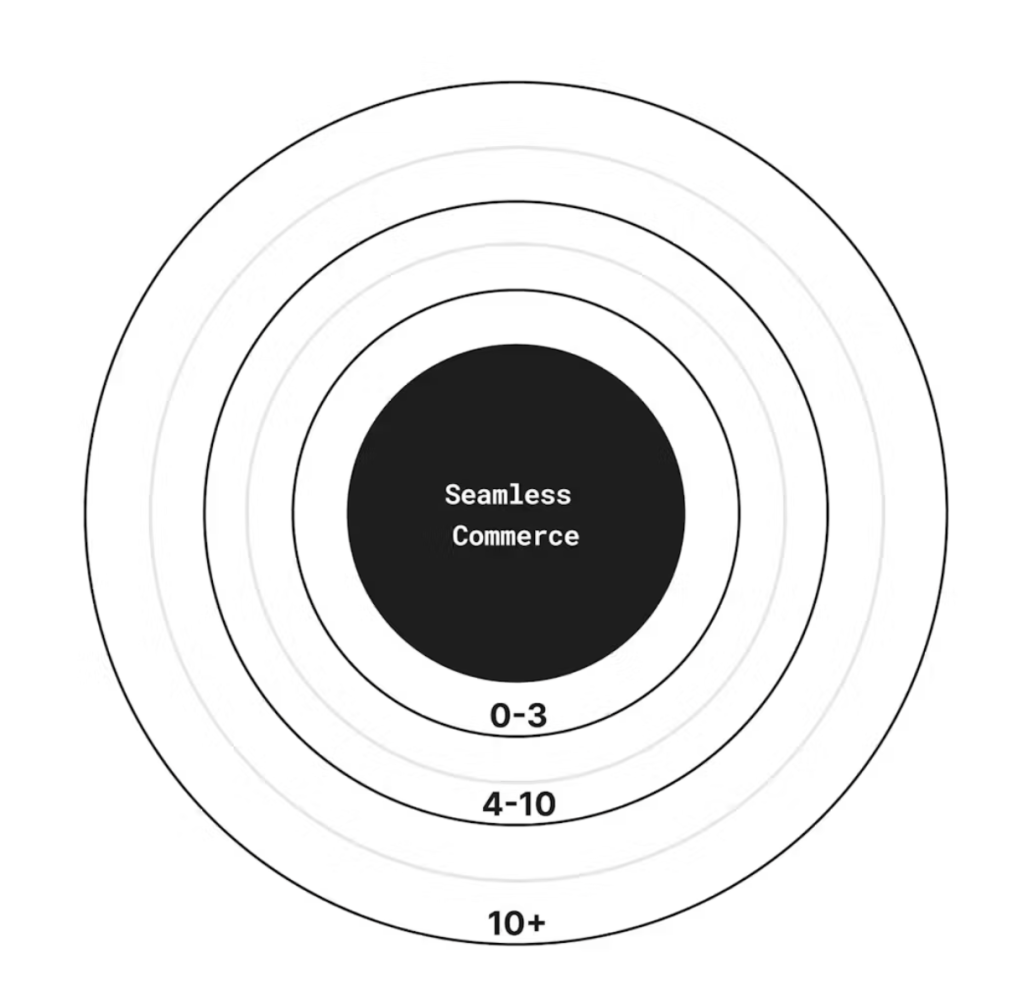
Additionally, participants were tasked with identifying ways to monitor the development of their trends moving forward. This exercise required participants to be both creative and analytical, as they explored what the future might hold while grounding their predictions in current realities.
Applied Scientific Insight: Futures Thinking and Scenario Planning
Futures thinking and scenario planning (Schwartz, 1991) are valuable tools for forecasting potential developments in uncertain environments. Futures thinking involves systematically exploring and anticipating possible, probable, and preferable futures. Scenario planning builds on this by developing detailed narratives or stories about how the future might unfold.
By dividing the future into distinct time horizons, we helped participants think systematically about how trends might evolve. The prompts for each horizon struck a balance between grounding predictions in current knowledge (0-3 years) and encouraging more speculative, imaginative thinking (10+ years). This structured approach to forecasting helped to generate insights that were both credible and provocative.
The Final Reflection: “What Could Woo Become?”
To close the workshop, we asked participants to reflect on the trends they had worked on and consider what WooCommerce’s role might be in the future they just predicted. This open-ended question was designed to spark creative, strategic thinking about our long-term potential.
Participants were invited to post their thoughts on our internal WordPress-based collaboration workspace P2 (btw, P2 is the most effective “intranet” I’ve ever seen). This allowed us to capture everyone’s ideas in a structured way, creating a valuable resource that could inform future decision-making.
Applied Scientific Insight: Open Innovation
Open innovation (Chesbrough, 2003) is a paradigm that encourages organizations to look beyond their internal resources and capabilities to drive innovation. By tapping into the knowledge and creativity of external stakeholders (in this case, workshop participants), organizations can generate a wider range of ideas and insights.
By allowing participants to share their thoughts openly, we fostered a sense of collaboration and co-creation. This approach not only generated valuable ideas for WooCommerce but also gave participants a stake in shaping our future direction.
Conclusion: Lessons Learned from Organizing a Workshop at Scale
Looking back, the effectiveness of this workshop can be attributed to a few key elements:
- Engagement through interactivity: Slack and Mentimeter kept participants actively involved, facilitating real-time collaboration and feedback.
- Structured creativity: By blending deliberate disruption (e.g., the seating exercise) with structured exercises, we fostered both creativity and productivity. This balance allowed us to generate innovative ideas while maintaining a clear focus on outcomes.
- Grounding in scientific insights: Throughout the workshop, we drew on relevant theories and research to inform our approach. From effective group dynamics to futures thinking, these scientific insights provided a robust foundation for our methods and exercises.
- Clear outcomes: Every discussion and exercise was designed to produce relevant insights, ensuring that the workshop delivered tangible value. By focusing on practical outputs, we made the most of our limited time and kept participants engaged and motivated.
This approach can serve as a model for future workshops aiming to balance creativity with practical outcomes. By using the right tools, fostering a collaborative environment, and grounding methods in scientific principles, it’s possible to extract meaningful insights, even in a short timeframe, with a large group.
Impact and Outcomes
The workshop generated a wealth of valuable insights and ideas for WooCommerce. The trend profiles and forecasts developed by participants will serve as an internal resource to inform our strategic planning and product roadmaps.
Beyond these tangible outputs, the workshop also had a significant impact on participants. Many reported feeling energized and inspired by the collaborative, creative atmosphere. The experience of working intensively with colleagues from different teams and backgrounds fostered new connections and a shared sense of purpose.
Ultimately, this workshop demonstrated the power of bringing people together to tackle big questions and challenges. By designing an experience that balanced structure and openness, individual reflection, and collaborative creation, we were able to harness the collective intelligence of 147 people and generate actionable insights that will help us shape the future of commerce.
Are You Planning a Workshop?
If you’re organizing a workshop and want to ensure it’s both engaging and effective, I encourage you to try incorporating some of these methods. Whether it’s using interactive tools, fostering creativity through chaos, or diving deep into trend analysis, these strategies can help you create a truly valuable experience.
When designing your workshop, consider:
- What are your key goals and desired outcomes? How can you structure exercises and discussions to achieve these?
- How can you balance creativity and productivity? What methods might help you generate innovative ideas while maintaining a clear focus?
- What scientific insights or theories might inform your approach? How can you ground your methods in research-backed principles?
- How will you keep participants engaged, especially if working with a large group? What interactive tools or techniques could facilitate active participation?
- What elements of your workshop can be done asynchronously? What parts will benefit from having the participants physically together in one room?
Workshops have immense potential to drive innovation, build relationships, and generate value, but realizing this potential requires careful design and facilitation. I hope this article has provided some useful insights and inspiration for someone.
Have you tried similar approaches? I’d love to hear about your experiences or thoughts on how we can better explore trends and drive innovation in the digital commerce space and beyond. Feel free to share your ideas in the comments!
References:
- Bonwell, C. C., & Eison, J. A. (1991). Active Learning: Creating Excitement in the Classroom. ASHE-ERIC Higher Education Reports.
- Chesbrough, H. W. (2003). Open Innovation: The New Imperative for Creating and Profiting from Technology. Harvard Business School Press.
- Dillenbourg, P. (1999). What do you mean by ‘collaborative learning’? In P. Dillenbourg (Ed.), Collaborative-learning: Cognitive and Computational Approaches (pp. 1-19). Elsevier.
- Hackman, J. R., & Morris, C. G. (1975). Group tasks, group interaction process, and group performance effectiveness: A review and proposed integration. In L. Berkowitz (Ed.), Advances in Experimental Social Psychology (Vol. 8, pp. 45-99). Academic Press.
- Lakoff, G., & Johnson, M. (1980). Metaphors We Live By. University of Chicago Press.
- Locke, E. A., & Latham, G. P. (1990). A Theory of Goal Setting & Task Performance. Prentice-Hall, Inc.
- Nooteboom, B. (2000). Learning and Innovation in Organizations and Economies. Oxford University Press.
- Rogers, E. M. (1962). Diffusion of Innovations. Free Press of Glencoe.
- Schumpeter, J. A. (1942). Capitalism, Socialism and Democracy. Harper & Brothers.
- Schwartz, P. (1991). The Art of the Long View: Planning for the Future in an Uncertain World. Doubleday.
 Matthias Reinholz
Leave a comment